Mar 27, 2026
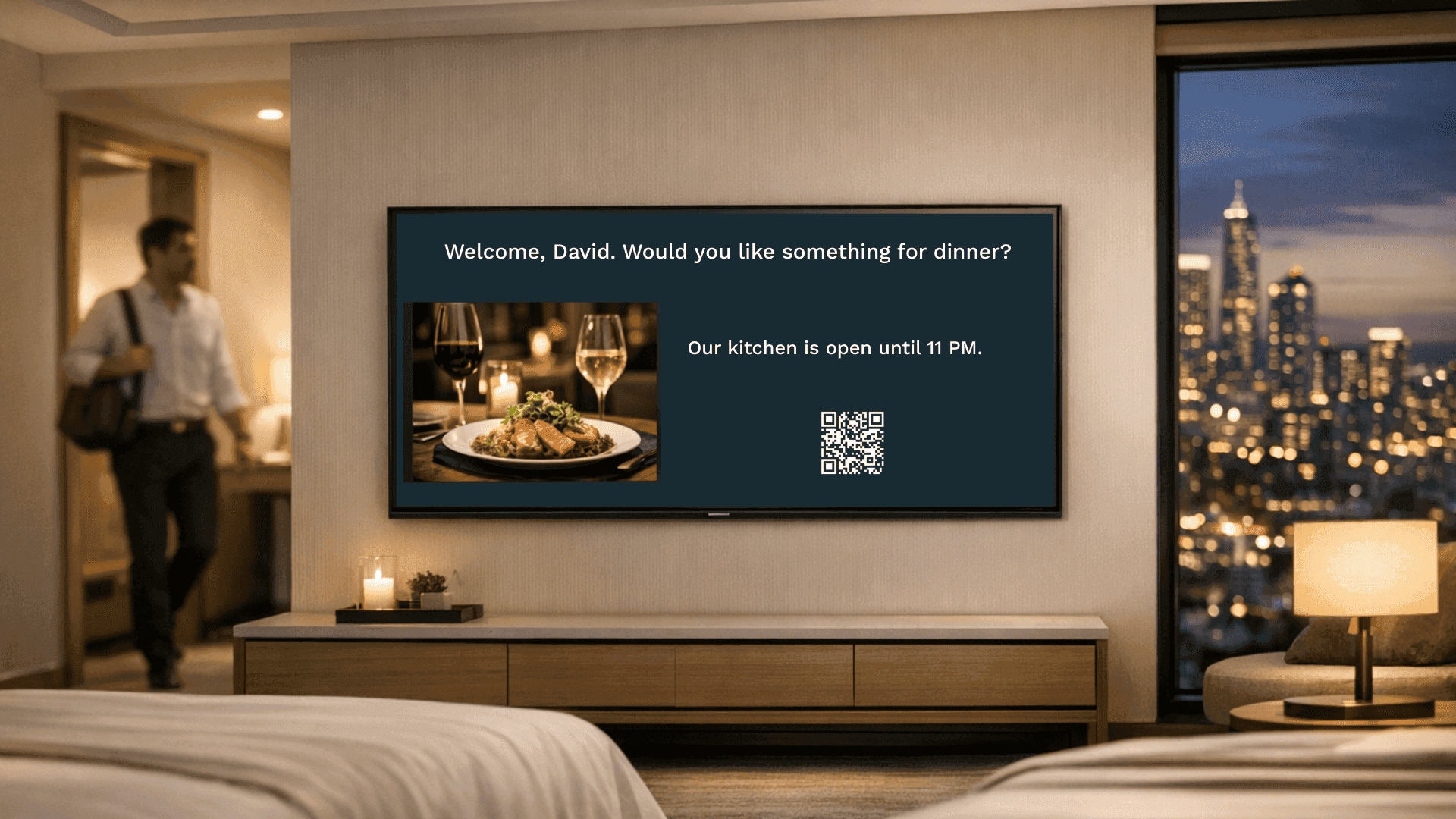
From the room to the TV: Where hotels can shape guest choices
There’s something that happens quite often in hotels: the destination is left out of the story. Hotel websites tend to focus on showcasing the property itself — its rooms, design, and services — but rarely explain what happens once you step outside. There’s little context about the neighborhood, and few cues to help guests understand why that location actually matters within their trip.
And once inside the hotel, that disconnect often becomes even more noticeable. The relationship with the destination is reduced to brochures at the front desk or occasional recommendations when someone asks.
Yet in most cases, the hotel isn’t the reason for the trip. The destination is. And that’s where a clear opportunity lies: turning that disconnect into a competitive advantage, and transforming the stay into an experience that feels far more connected to the place itself.
1. The cost of not integrating the destination into the hotel’s proposition
When a hotel doesn’t actively incorporate the destination into its offering, it doesn’t just lose a layer of storytelling — it loses the ability to influence the experience. Guests end up making key decisions — where to dine, what to visit, how to plan their time — relying on external tools that don’t take into account the hotel’s context or its value proposition.
This leads to two direct consequences. On one hand, the hotel misses clear opportunities to generate additional revenue, especially through partnerships with local businesses, curated experiences, or strategic collaborations. On the other, it loses relevance during the stay — precisely when the guest is most receptive and actively making decisions.
This isn’t just a communication issue. It’s about control over the experience.
2. The hotel as a facilitator of the destination
Some hotels have started to approach this from a different perspective. Instead of focusing solely on highlighting their facilities or services, they take on a broader role: helping guests understand and navigate the destination. They become a reliable source of guidance, able to offer accurate and up-to-date information about what truly adds value beyond the hotel itself.
This approach isn’t about adding more content or creating endless lists of recommendations. It’s about interpreting the surroundings and making them accessible: providing curated suggestions for places, activities, or restaurants, and adapting those recommendations to the type of guest, the moment in their stay, and their actual needs. In other words, it turns the complexity of a destination into something manageable, useful, and directly applicable to the guest experience.
Because, in reality, guests don’t need an endless list of things to do. They need direction. They want to know what makes sense to do at that moment, from that place, with the time they have available. And when a hotel is able to filter, contextualize, and personalize that information, it stops being just a place to stay — and becomes an active part of the journey.
3. The key moment that is almost always overlooked: the room
In some cases, hotels do address the destination before arrival — through blog articles, social media, or even pre-stay emails. But there’s a decisive moment where that intention disappears: when the guest is already at the hotel.
That’s when interest in the destination shifts from aspirational to practical. The guest is no longer imagining the trip — they’re deciding what to do in the next few hours. They evaluate options, check the weather, look at opening times, and consider whether to go out or stay in. It’s a natural planning moment.
And yet, at this stage, the hotel often drops out of the process. Not because of a lack of intent, but because there’s no integrated channel within the room experience that allows the hotel to support the guest in that decision-making moment.
4. The room: a strategic space, not just a place to rest
The room is one of the spaces where hotels have the greatest capacity to influence the guest experience. It’s an intimate, quiet environment, free from external distractions — a place where guests pause, organize their time, and decide how to make the most of their stay. And yet, in most cases, it still functions as a passive space: comfortable, well-designed, but disconnected from its surroundings.
The problem isn’t technological. It’s conceptual. What’s missing is a clear vision of how this space can become a strategic touchpoint — one that connects guests with the destination in a natural, contextual way, at exactly the right moment.
5. The TV as a strategic channel to connect guests with the destination
En este contexto, la televisión de la habitación tiene un potencial que durante mucho tiempo ha pasado desapercibido. No como un canal de entretenimiento ni como un directorio digital más, sino como un punto natural de conexión entre el huésped y el destino durante la estancia.
In this context, the in-room TV holds a potential that has long gone unnoticed. Not as an entertainment device or just another digital directory, but as a natural point of connection between the guest and the destination during their stay.
The difference lies in how it’s used. When the TV becomes a layer of context, its role changes completely. It allows hotels to introduce relevant information at the right moment:
A late-arriving guest doesn’t need a full guide — they need nearby options that are still open.
A change in weather reshapes what plans make sense.
A short stay requires prioritization, not endless lists.
A business trip defines which experiences are actually relevant.
The key isn’t to offer more content, but to offer the right content at the right moment.
6. Real business impact
When a hotel is present at key decision-making moments, it increases its ability to influence how guests engage with the destination. This translates into higher in-room engagement, more contextual consumption, and reduced reliance on external channels.
It also allows the hotel to position itself differently. It no longer competes solely on what it offers inside the property, but on how it enables what happens outside. And that, in turn, reduces the pressure on price as the primary factor in the decision-making process.
7. How to get started without adding complexity
This approach doesn’t require major structural changes. It’s not about building a comprehensive destination guide, but about identifying key moments during the stay and linking them to relevant suggestions.
Arrival, the end of the day, gaps between activities, changes in weather, or short stays are some of those moments. From there, the focus is on understanding what kind of decisions guests make in each of them — and how to make that process easier.
It’s an approach that aligns more with service logic than with content creation.
The hotel as a gateway to the destination
The room is no longer just a place where the journey pauses. Increasingly, it’s where guests decide what to do next.
That’s where the hotel can reclaim a key role — not as the main character, but as a facilitator. One that helps guests understand the destination, discover it more meaningfully, and do so at the right moment.
This not only creates differentiation, it also opens up new revenue opportunities through local offerings seamlessly integrated into the experience. But above all, it transforms how guests perceive their stay. Because when a hotel successfully connects with the destination, it stops being just a place to stay — and becomes a real part of the journey.
Industries
Hospitality
IPTV/OTT operators
Content owners
Sports platforms
Contact
info@yuvod.com
